Fountain, Rollerball, or Ballpoint?

Field Guide No. 09 · The Wet Signature
Fountain, Rollerball,
or Ballpoint?
Three formats, one hand, and only one of them belongs on a carbon-backed form.
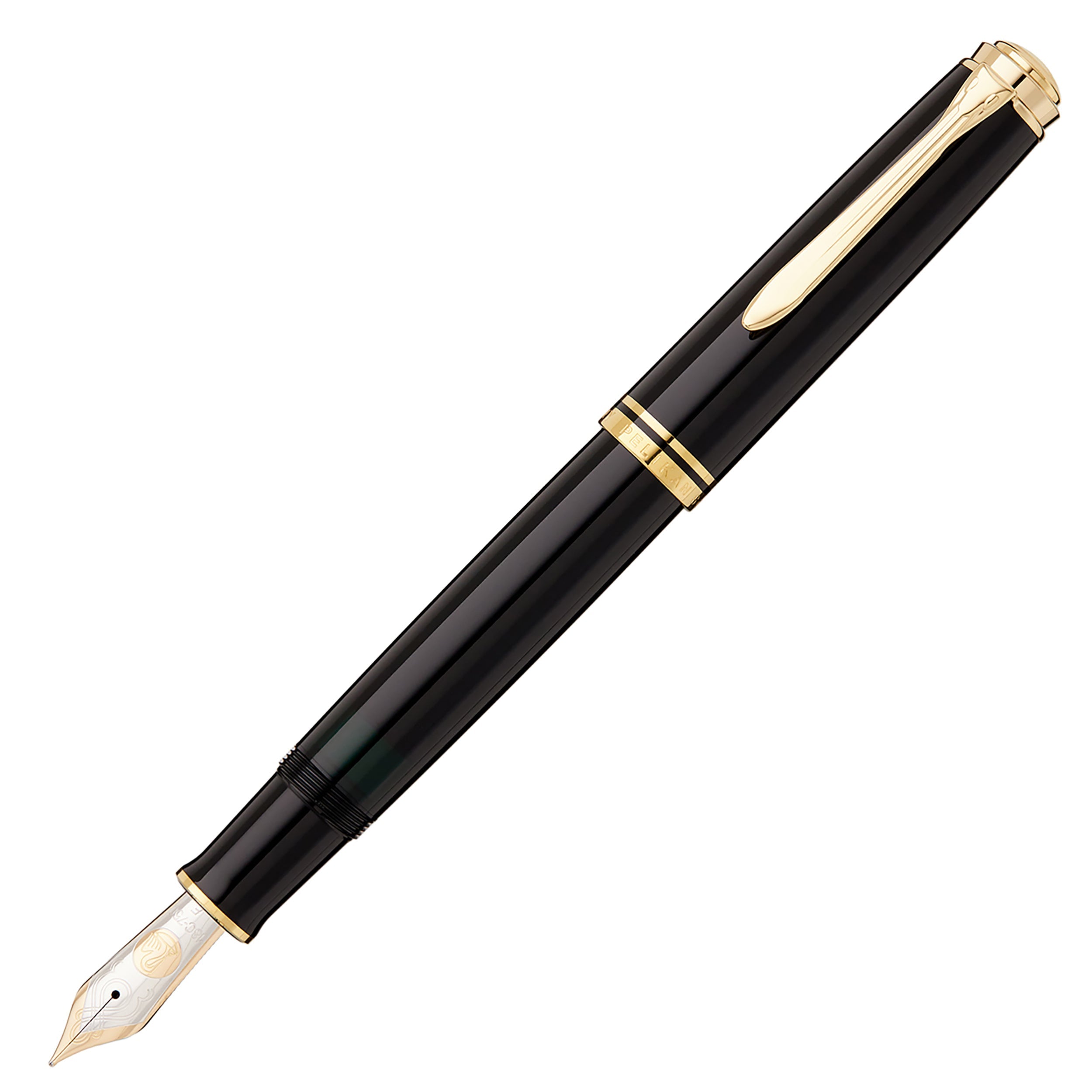
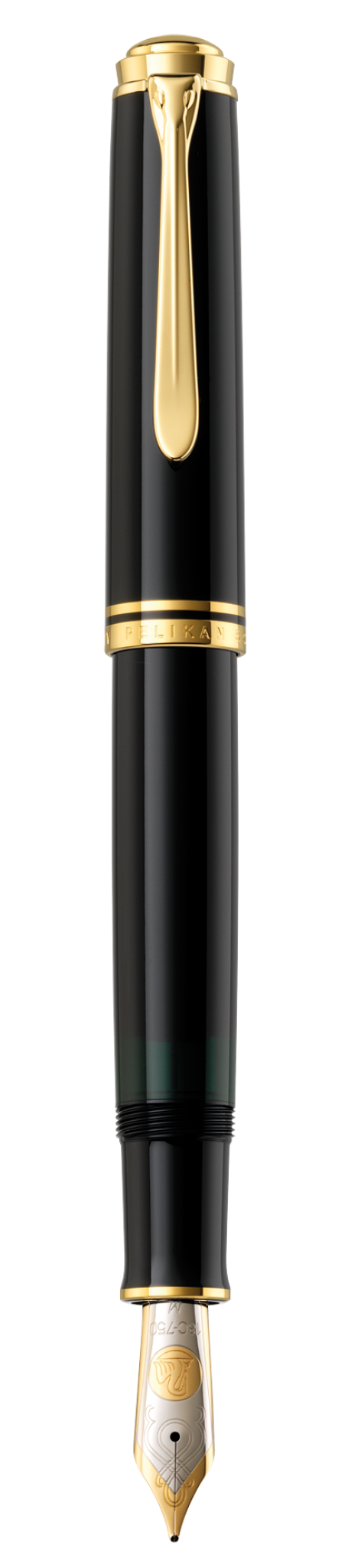
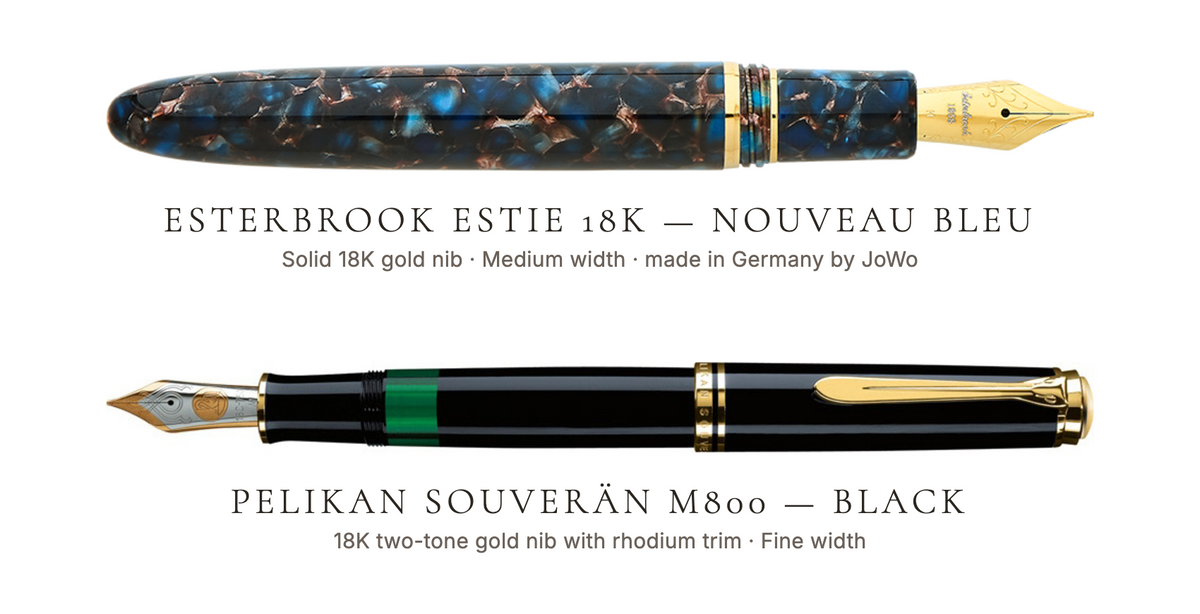
This shop sells the same pen three times. The Esterbrook Estie in Nouveau Bleu is made as a fountain pen with a solid 18-karat gold nib, as a rollerball, and as a ballpoint — same swirled acrylic, same gold trim, same barrel in the hand. Only the ink differs.
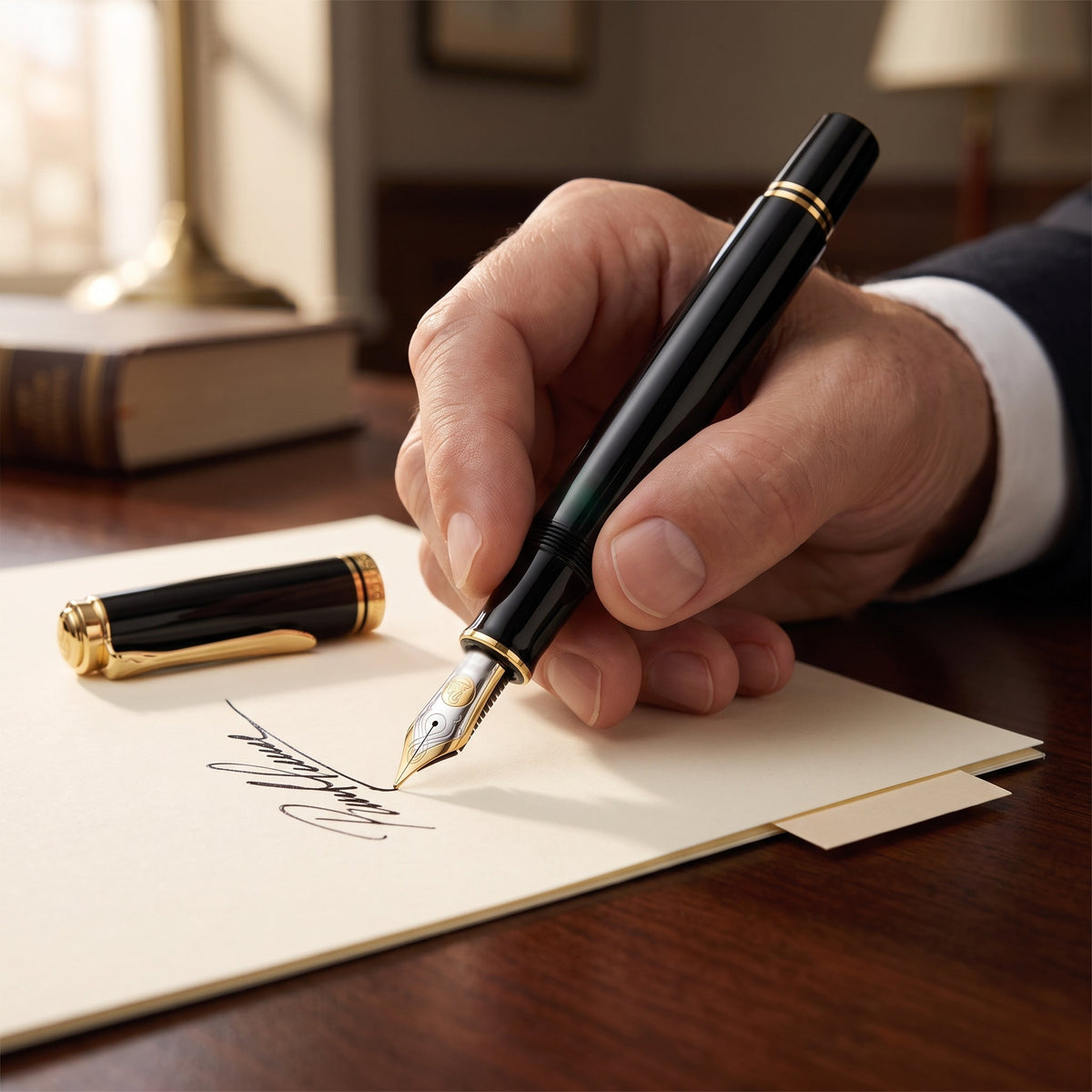
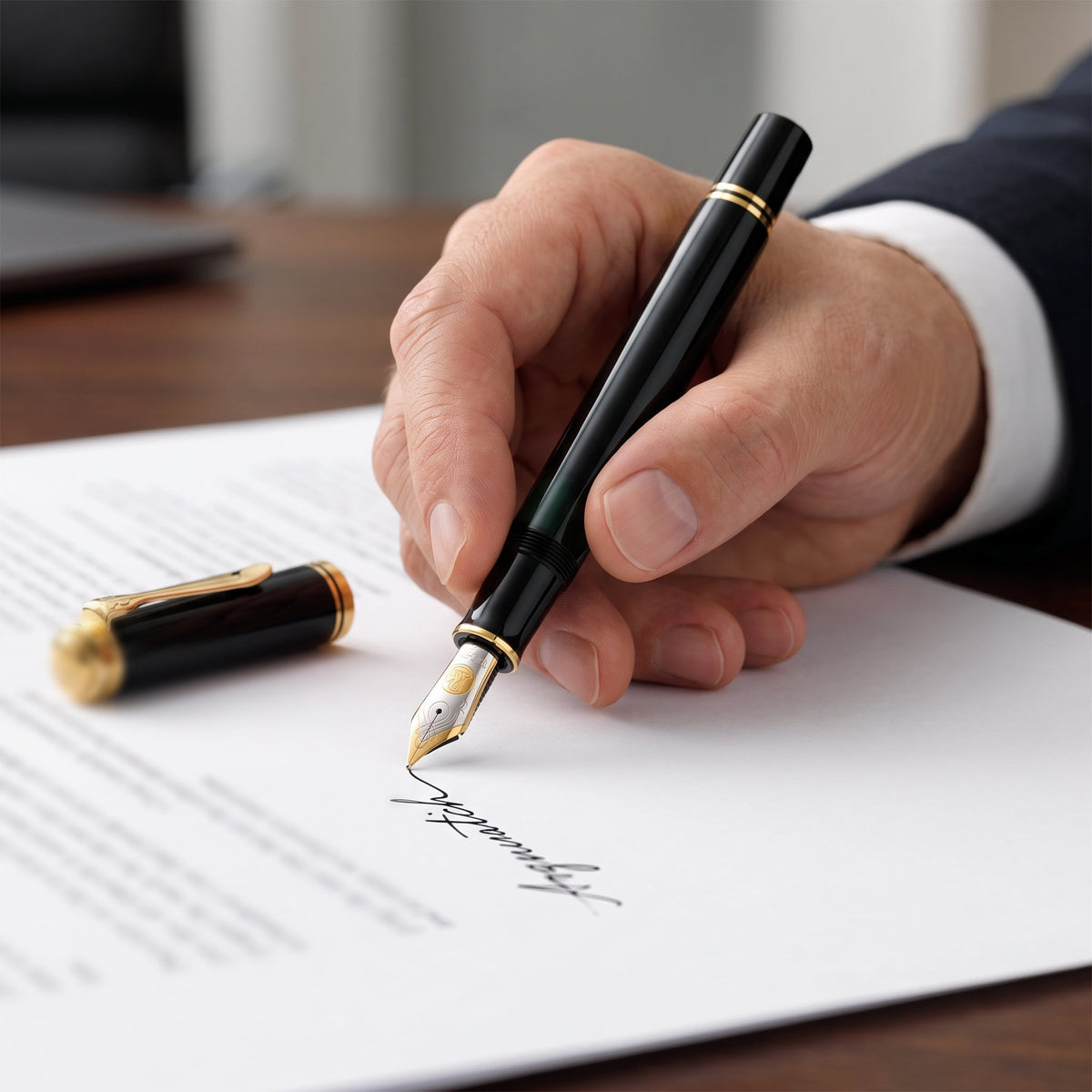
The ink is the only variable — and it is enough to make them three different instruments. A lawyer signs three kinds of document in an ordinary week: the certificate that ends up framed, the letter that closes a matter, and the engagement letter signed on a clipboard — which nobody will ever admire, and which has to survive a filing cabinet for seven years.
The Three Formats
| Fountain | Rollerball | Ballpoint | |
|---|---|---|---|
| Ink | Water-based dye | Water-based or gel | Oil-based paste |
| The line | Wettest, most character | Wet, dark, continuous | Drier, consistent |
| Pressure | Almost none | Very little | Real pressure, by design |
| Multi-part forms | No | No | Yes — the only one |
| Water resistance | Poor | Poor | Good |
| Dries | Slowest | Slow enough to smudge | Effectively at once |
| Lend it without thinking | No | Yes | Yes |
| Without saying it, it says | "This one was worth doing properly." | "I write a great deal by hand." | "Sign here." |
The pen that suits the first is a poor choice for the third, and the reason is chemistry rather than taste.
The Verdict
The honest version
The pen you would most like to sign with is not the pen you should sign most documents with.
A gold nib makes the better signature in every sense having to do with how it looks and how it feels to write. It also uses water-soluble ink, cannot mark a multi-part form, and is not a pen you hand to a stranger. None of that is a criticism. It is a description of what the thing is for.
Buying one pen: buy the ballpoint, and be unembarrassed about it. Buying two: add the rollerball, because a ballpoint is poor company for two hours of handwriting. Buy the fountain pen when a document is coming that deserves it — or, more often, for someone else, at the beginning of something.
Exhibit A — What the ink actually does
Three inks, three jobs.
Ballpoint ink is an oil-based paste laid down by a ball under pressure. That pressure requirement looks like a shortcoming next to a fountain pen, and it is the whole reason the profession runs on ballpoints: pressure is what drives an impression through a carbonless multi-part form. It dries on contact and resists water.
Rollerball ink is water-based and thin, so it flows with almost no pressure — the wet line of a fountain pen with no nib to look after. It also feathers on cheap stock, shows through thin paper, and stays wet long enough to smudge under a moving hand.
Fountain ink reaches the nib by capillary action, asks the least pressure, and gives the most character: the line varies with the hand holding it, which is why an inscription written with one looks like a person wrote it. Most fountain inks are dye-based and water-soluble. A knocked-over glass takes the signature with it.
- AThe ballpoint's pressure carries the impression to every sheet — the original, the file copy and the client copy all get the signature.
- BThe rollerball marks the top sheet and stops there. So does a fountain pen. Nothing reaches sheets two and three.
A Note on the Color of Ink
Why the profession signs in blue
An original signature in blue can be told from a photocopy at a glance; a black one cannot. A clerk holding two versions of the same page knows at once which is the executed original. That is the whole reason, and the convention survives because it is useful rather than because anyone insists on it.
It is a practice, not a rule. Some agencies and older imaging systems specify black, and where a filing states a requirement the requirement wins. Where it does not, blue is the sensible default. All three Estie formats take a standard Schmidt-style refill in either color, so this is a decision you can reverse for the price of a refill.
The Docket
Which one, which moment
The document on the desk decides the pen, every time.
| The document | The pen |
|---|---|
| Certificate or inscription | Fountain, medium nib |
| A letter closing a matter | Rollerball, or fountain |
| Notes, redlines, margins | Rollerball |
| Anything multi-part | Ballpoint, no exceptions |
| Signed away from a desk | Ballpoint |
| A pen you may not get back | Ballpoint |
MORE FROM THE FIELD GUIDE
Padfolio, or Portfolio?
Card Case, or Card Wallet?
Fine Nib, or Medium?
A Cigar, Counselor?
The Churchill, or the Silk?
The Catalog Case: Hand Carry or Wheeled?
Season It, or Ruin It?
The Shirley, or the Camilla?

Written by James Kaywell