A Cigar, Counselor?

Field Guide No. 04 · The Cigar Ritual
A Cigar,
Counselor?
The profession's oldest closing ceremony — and the four instruments it actually requires.
Every practice accumulates victories that deserve more than an email — the closing that finally closed, the partnership vote, the verdict that came back right, the child who arrived while the trial calendar waited. For the better part of two centuries the profession has marked those moments the same way: deliberately, briefly, and with a cigar.
What changed is not the ritual but its address. Florida wrote the answer into its own constitution: tobacco smoking is prohibited in every enclosed indoor workplace, a law office squarely included.1 Read the exceptions, though, and they scan less like loopholes than like an itinerary — the private residence, the stand-alone bar, the retail tobacco shop, the designated guest room at a hotel. The ritual did not end when it left the firm. It moved to the study and the porch, the club and the ninth hole, the lounge on a Thursday evening, the hotel balcony three states from home during a deposition week. The instruments moved with it.
This guide makes the case for the ritual — the history, argued with citations — and for the four instruments it requires: the cutter, the lighter, the humidor, and the ashtray. We sell the instruments, not the tobacco. The celebration, as ever, you supply yourself.
- Fla. Const. art. X, § 20(a)–(b) (prohibiting tobacco smoking and vapor-generating electronic devices in enclosed indoor workplaces, and excepting private residences not used commercially to provide child, adult, or health care; retail tobacco shops; vapor-generating electronic device retailers; designated smoking guest rooms at public lodging establishments; and stand-alone bars). Approved by 71 percent of Florida voters in November 2002 and implemented by the Florida Clean Indoor Air Act effective July 1, 2003; vapor products were folded into the same prohibition effective July 1, 2019. See Fla. Dep't of Health, Florida Clean Air Act, floridahealth.gov. Note also that the section expressly leaves an owner or lessee free to restrict further — so even the excepted spaces are permissive, not guaranteed. Florida is no outlier: the American Nonsmokers' Rights Foundation reports that 78.2 percent of the U.S. population now lives under a smokefree restaurant law and 66.8 percent under a smokefree bar law. See no-smoke.org. ↩


Exhibit A — The Cut & The Light
Preparation, made physical.
The ritual opens the way a case does: with preparation. The cut — one clean, decisive motion just above the cap's shoulder — determines the entire draw that follows, and a botched one cannot be argued back into shape. The light is slower than a cigarette's and means more: toast the foot first, then draw. Together they mark the transition from negotiation to resolution. The parallel to practice is not subtle, which is much of why the profession has always liked it.
- AAperture — sized to the cigar's ring gauge. The cigar rests here; the decision happens around it.
- BTwin blades — a double guillotine shears from both sides at once, so the cap cuts clean instead of tearing.
- CTorch jet — a pressurized butane flame that burns hot, straight, and indifferent to weather.
- DFuel window — the gauge that keeps an empty lighter from ambushing a good moment.
| The cut | One motion, just above the cap's shoulder |
|---|---|
| The light | Toast the foot first, then draw |
| Best for | The moment work turns into celebration |
Exhibit B — The Keep & The Rest
Where patience pays interest.
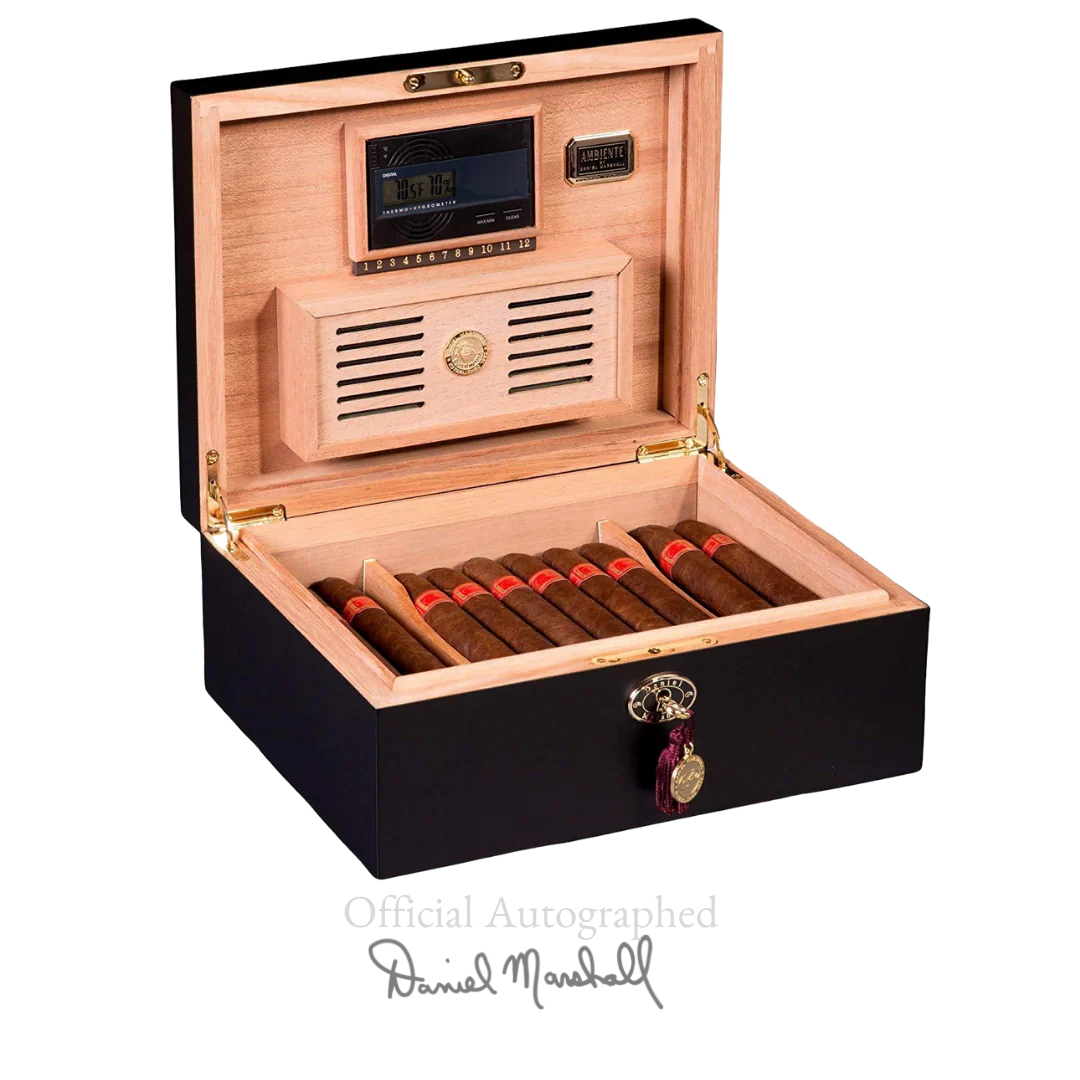
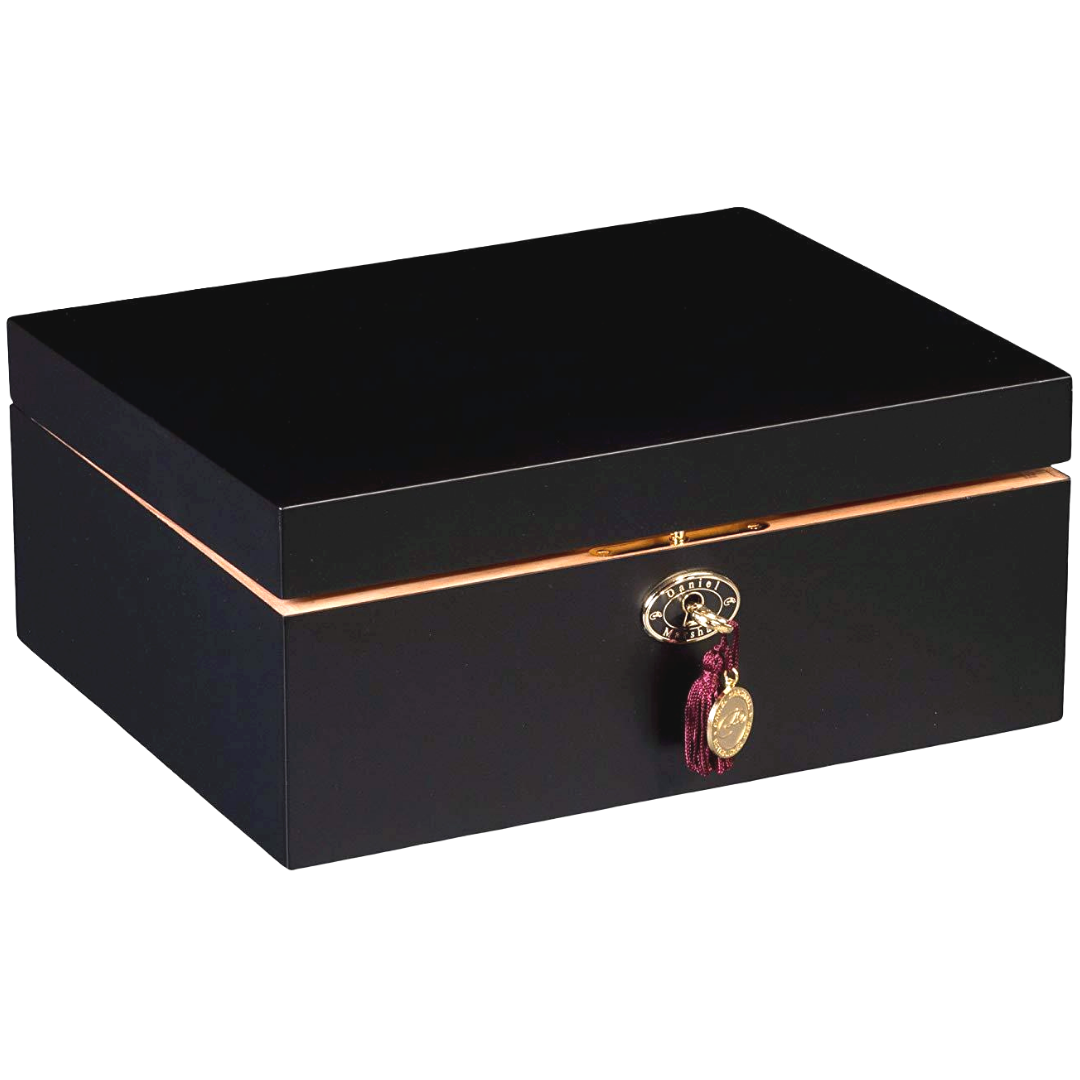
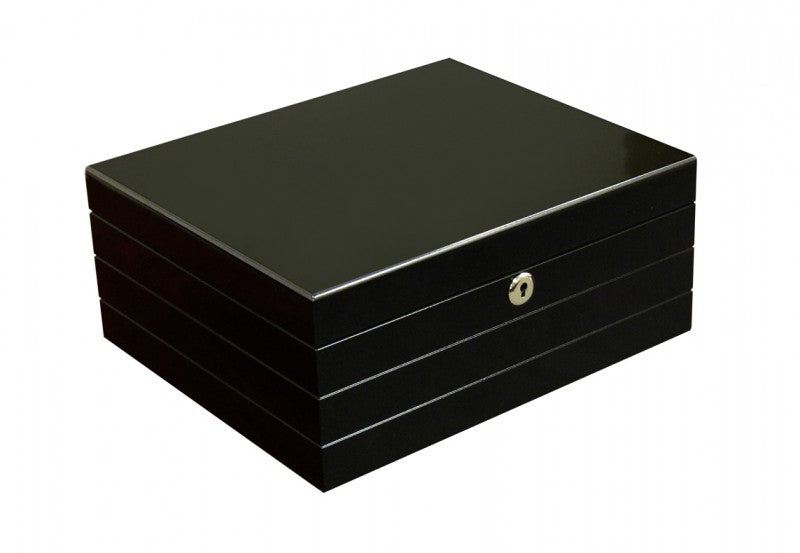
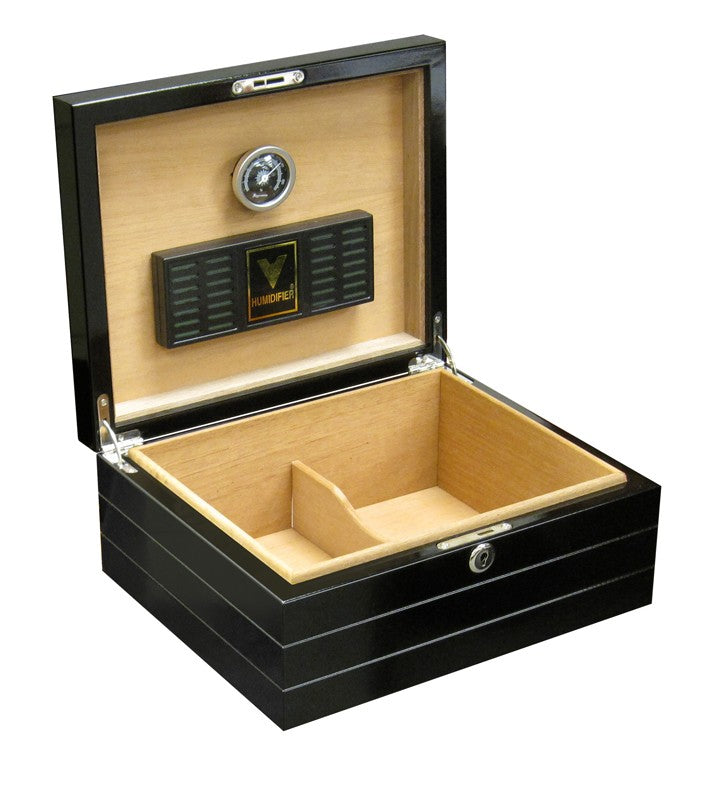
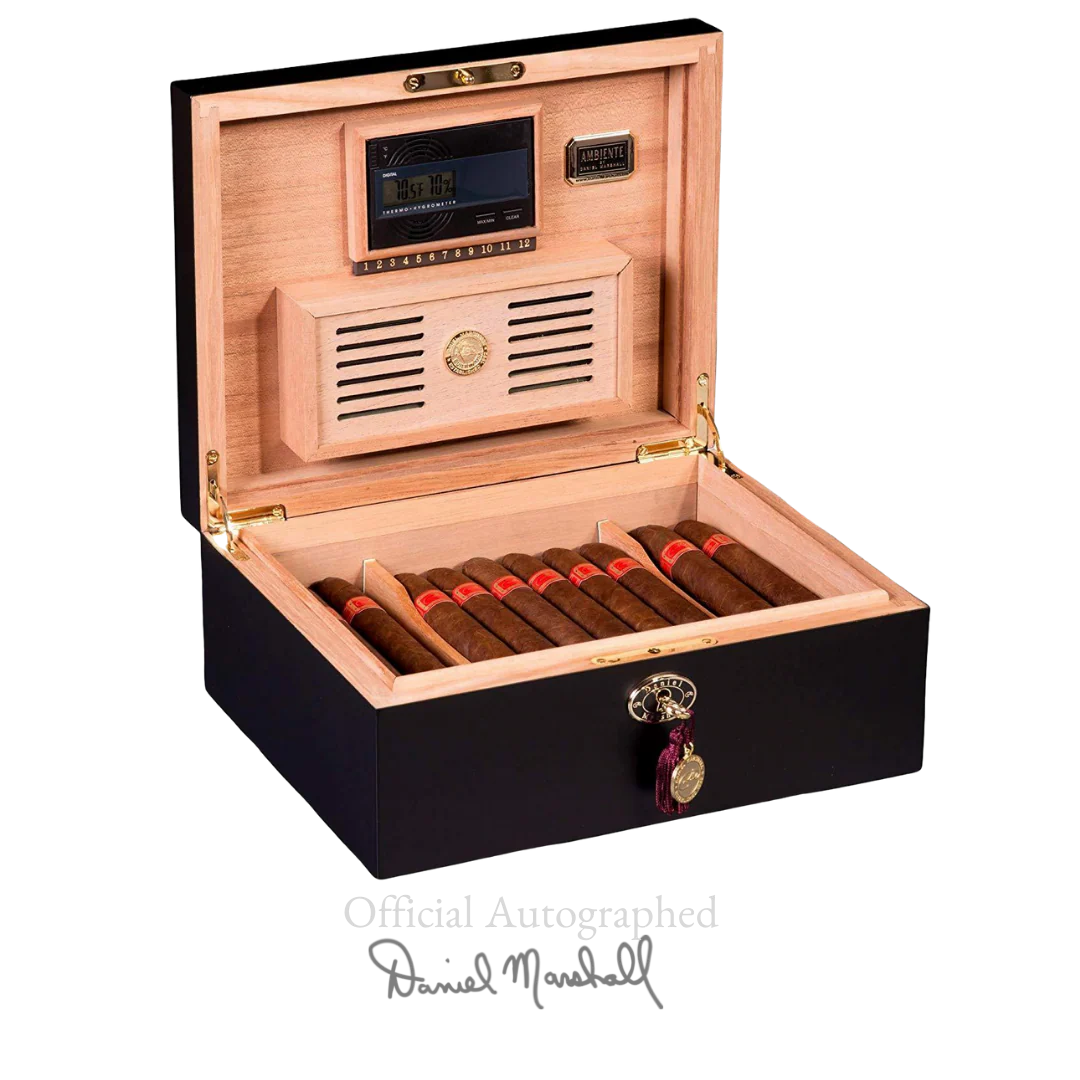
It is a desk-scale climate — 65 to 72 percent relative humidity at 65 to 70°F — for the working collection you actually intend to smoke, lined in Spanish cedar because cedar absorbs and re-emits moisture in a way that helps a cigar age rather than merely survive.2 The stakes are real: left out in a heated or air-conditioned room, a cigar can dry out and die, in Cigar Aficionado's words, "as quickly as the most delicate flower — in less than an hour."2 The ashtray is the ritual's punctuation: a proper rest lets a cigar pause mid-conversation without going out.
- ALid & seal — the fit of the lid, not a latch, is what holds the climate. Listen for the soft "whoosh" on closing.
- BSpanish cedar lining — absorbs and re-emits moisture, and repels the beetle no one wants to meet.
- CHygrometer & humidifier — the instrument panel. Calibrate the gauge before you trust it with anything.
- DThe rest — a notch sized so a cigar waits at an angle instead of dying flat.
| Capacity sweet spot | ≈ 50 cigars — a collection, not a warehouse |
|---|---|
| Climate | 65–72% relative humidity, 65–70°F |
| Best for | The study, the credenza, the long game |
- Storing Cigars, Cigar Aficionado, cigaraficionado.com/article/storing-cigars-7429 (recommending humidity "in the range of 70 to 75 percent" at an internal temperature of "about 68 to 70 degrees Fahrenheit"; explaining that Spanish cedar "absorbs and re-emits moisture in a way that helps the tobaccos that are blended into a fine cigar to age and mature"; and observing that in a heated or air-conditioned room a cigar "can dry out and die as quickly as the most delicate flower -- in less than an hour").But note: the range stated above departs from Cigar Aficionado's. The 70/70 convention traces to matching the tobacco's growing conditions — see Cellaring Cigars, Cigar Aficionado, cigaraficionado.com/article/cellaring-cigars-38 (Gordon Mott, executive editor, describing "a 70 degree temperature at 70 percent humidity, which roughly matches the growing conditions of the tobacco") — while current producer guidance runs lower. Habanos S.A. specifies 65–70% RH at 16–18°C for aging finished cigars, the standard used by Casa Habano retailers worldwide; Boveda defines the safe storage range as 65–72% RH, recommends 69% as its everyday target, and reports significant mold risk above 72%. Tobacco beetle larvae hatch where relative humidity exceeds 72% and temperature exceeds 72°F simultaneously, which is why this guide holds its upper bound at 72 rather than 75. The same Cigar Aficionado column, it is worth noting, records its own author's preference as 65 percent and 65 degrees. ↩
The Spec Sheet
Guillotine, or punch
Every ritual opens the same way: something has to open the cigar first.
| Guillotine Cut | Punch Cut | |
|---|---|---|
| The cut | Straight across the cap, one motion | A small circle bored through it |
| The draw | Open and generous | Focused, slightly firmer |
| Margin for error | Small — cut below the shoulder and the wrapper unravels | Generous — there's almost nothing to misjudge |
| Without saying it, it says | "I've done this before." | "I travel light." |
The Docket
Which milestone, which cigar
Four occasions, and the case for marking each one deliberately — somewhere better than the office, a question the law has already settled for us.
Closing the transaction
The clean cut
The signatures are dry and the wire has cleared. Save it for the porch that evening, and let the cut that opens the celebratory cigar be as decisive as the negotiation wasn't.
Making partner · taking the bench
The back row of the humidor
The cigar you laid down years ago for a day you couldn't schedule. This is what the humidor in the study was holding its breath for.
The birth of a child
A box, not a single
The oldest cigar custom there is — this one you hand out rather than smoke. Weddings and anniversaries observe the same rule. Stock accordingly.
The quiet Friday after the verdict
One cigar, at a time
Twain claimed he'd made it a rule never to smoke more than one cigar at a time,3 and the rule holds: the ritual works because it ends. A chair outdoors, a half hour, and the file keeps until Monday.
- Mark Twain, Seventieth Birthday Speech, Delmonico's, New York (Dec. 5, 1905) ("I have made it a rule never to smoke more than one cigar at a time."); but see Quote Investigator, I Have Made It a Rule Never To Smoke More Than One Cigar at a Time (Oct. 14, 2018), quoteinvestigator.com/2018/10/14/one-cigar/ (tracing the quip to unattributed newspaper New Year's resolutions as early as 1882 — Twain perfected the delivery; he did not originate the joke). ↩
Building the Kit
Four instruments, three ways in
Every tier serves the same ritual. The difference is how much of it stays put.
The humidor tier deserves a word on size. Fifty cigars is the deliberate choice, not the compromise: large enough to hold a working collection at a stable climate (see note 2, supra, on why the climate matters more than the count), and small enough to live on a study desk or credenza rather than in a closet. Past that, you're not keeping cigars — you're warehousing them, and warehousing is a different hobby.
Starter
Cut & Light
A double-guillotine cutter and a torch lighter. The ritual's two verbs — cut and light — done properly, and pocketable enough to go wherever the occasion turns out to be.
Investment
Cut, Light & Rest
Adds the ashtray with a proper rest. The ritual gains punctuation, and the room gains an object worth looking at between victories.
Heirloom
The Full Ensemble
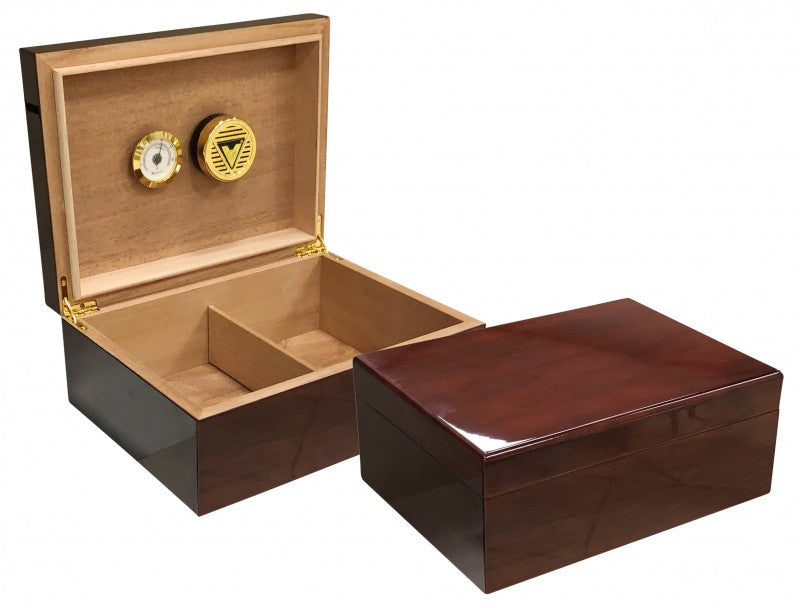
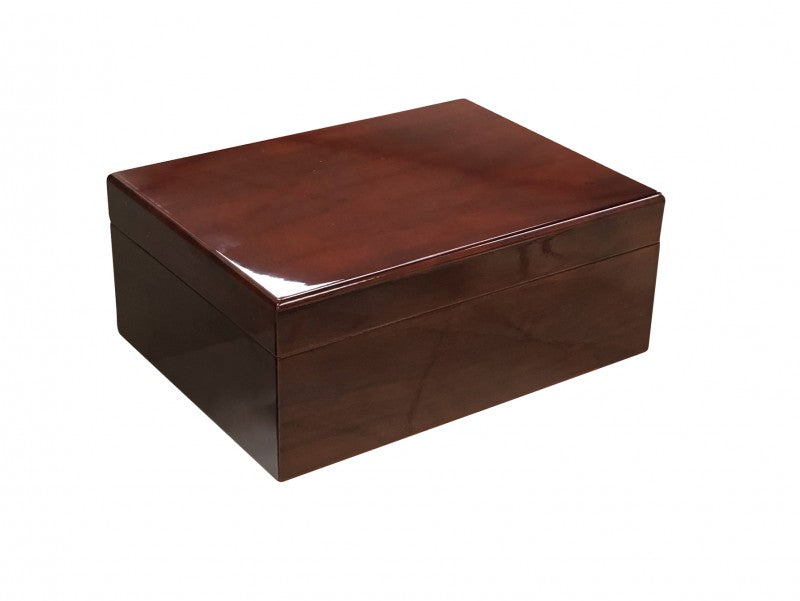
The full ensemble, anchored by a 50-count desktop humidor — the study's climate control, keeping a celebration ready before you've had time to schedule it.
Exhibit C — Anatomy of the Flame
The detail that decides how the first draw tastes.
Soft flame — the traditional, naked flame. It burns cooler and slower, forgives a close approach, and rewards an unhurried toast. In the study after dinner, or in a lounge with the door closed behind you, it is the gentleman's default. Its weakness is weather: a breeze off the water or across the ninth fairway will beat it every time, and relighting in the wind is not a dignified spectacle.
Torch — a pressurized butane jet. It burns hotter and straighter, is indifferent to wind, and toasts a wide ring gauge evenly in half the time. It is the one that earns its keep on the porch, the boat, the course, and the courthouse steps. Its risk is enthusiasm: held too close, it scorches the foot, and the first draw tastes like the mistake. Keep the blue cone's tip an inch away and let the heat — not the flame — do the toasting.
The maison's own film from the Faverges workshop — the lacquer at 0:54, the guilloché at 1:18, the flame test at 1:58. Captions theirs.
The Argument
The Cigar Brief
Why the ritual earned a place in this catalog — the case for the file.
A curated catalog means every category has to earn its way in, not merely sit adjacent to leather. Three grounds are why the cigar ritual did.
Ground I — Precedent
Two centuries on the record
Nineteenth-century America put its great advocates on the cigar box, literally: Daniel Webster's portrait was still selling cigars under his own name decades after his death.5 When a profession's likenesses end up on the lid, the association is no longer a marketing theory — it's a matter of record.
Ground II — Authority
From chambers to the White House
Fiction gave the bar Rumpole of the Bailey, whose small cigar was as much a part of his silhouette as the Wordsworth quotations — written by John Mortimer, a practicing barrister who drafted the stories at dawn before appearing at the Old Bailey.6 Fact gave it something better: by his press secretary's own account, President Kennedy asked his press secretary for 1,000 Petit Upmanns one February evening in 1962 — and was handed 1,200 the next morning — and signed the Cuban embargo only after they were safely in hand.7
Ground III — The Instruments
Tools, not tobacco
This catalog carries the ritual's instruments — cutter, lighter, humidor, ashtray — and not the cigar itself. Brass, steel, and Spanish cedar sit in the same traditional register as full-grain leather, so the ensemble reads as one collection rather than an accessory bolted onto it. What goes in the humidor is, as it should be, your own closing argument.
- The Metropolitan Museum of Art, Daniel Webster, from the "Heroes of History" Series (T68), metmuseum.org/art/collection/search/780390 (tobacco card issued with Royal Bengals Little Cigars, ca. 1911); see also Daniel Webster Cigars — Cigar Band, Dartmouth Libraries Archives & Manuscripts, archives-manuscripts.dartmouth.edu (Webster-branded cigar ephemera). ↩
- John Mortimer, Rumpole of the Bailey (1978), and the thirteen collections that followed; see Rumpole of the Bailey, en.wikipedia.org/wiki/Rumpole_of_the_Bailey (Rumpole "enjoys smoking inexpensive cigars," to the recurring dismay of his chambers; Mortimer, a Queen's Counsel, rose at 5:30 a.m. to write before court). A caution for the careful reader: several stirring cigar quotations circulate under Rumpole's name online. We could not verify them against the text, so we cite the habit, not the aphorisms. ↩
- Pierre Salinger, Kennedy, Cuba and Cigars, Cigar Aficionado (Autumn 1992); Proclamation No. 3447, 27 Fed. Reg. 1085 (Feb. 3, 1962) (effective Feb. 7, 1962). Salinger's is a firsthand account told three decades later, and the proclamation's paperwork is dated four days before it took effect — so the legend's cigars-first, embargo-second timing rests on Salinger's word alone. The Court notes the conflict and declines to resolve it. ↩
Closing Argument
The ritual earns its place the way anything does in a working life: it marks the difference between finishing a matter and honoring one. A cut, a light, a half hour of reflection — deliberate, moderate, and shared when it matters most. The office was never the point; the pause was. The wins are rare enough. Mark them properly, wherever you happen to be standing, and you'll rarely choose wrong.
Shop the Cigar RitualMORE FROM THE FIELD GUIDE
Padfolio, or Portfolio?
Card Case, or Card Wallet?
Fine Nib, or Medium?
The Churchill, or the Silk?
The Catalog Case: Hand Carry or Wheeled?
Season It, or Ruin It?
The Shirley, or the Camilla?
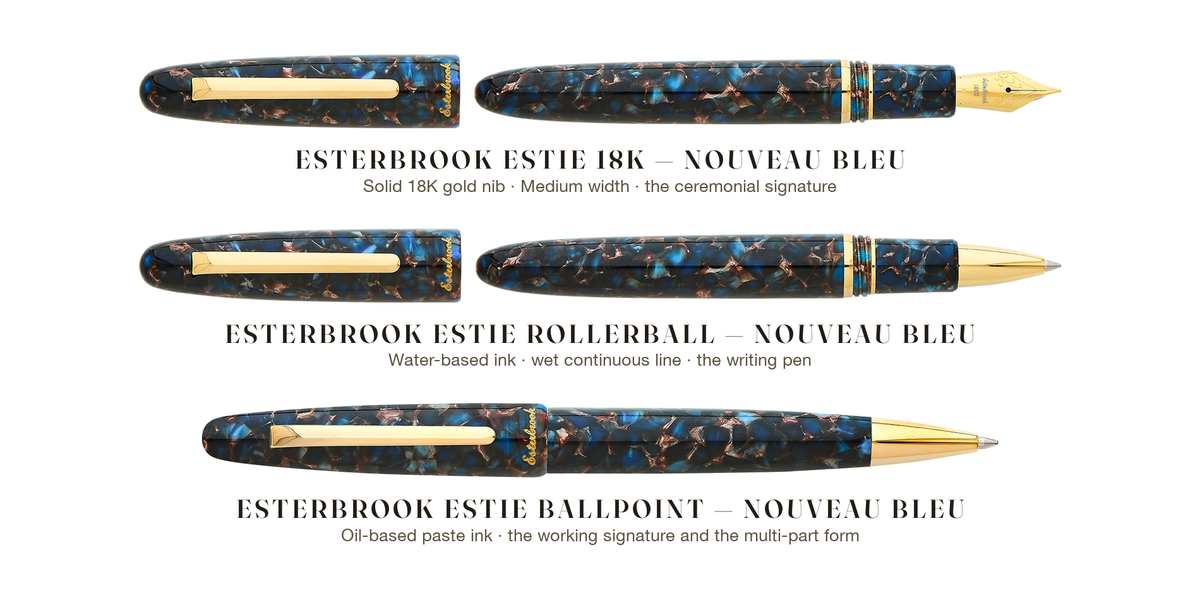
Fountain, Rollerball, or Ballpoint?

Written by James Kaywell